Choosing reliable Windows For Homes manufacturers in China requires more than comparing catalog photos or factory size. This guide examines ten established suppliers through practical criteria, including product quality, manufacturing experience, export capability, customization, and after-sales support. It considers uPVC, aluminum, wood, and aluminum-clad systems for apartments, villas, renovations, and new developments. Details such as frame thickness, glass configuration, thermal breaks, drainage design, and hardware durability can affect daily comfort.
Real projects reveal more than polished brochures.
A dependable manufacturer should explain U-values, air tightness, water resistance, wind-load performance, and applicable test standards clearly. Buyers should also review factory certifications, production equipment, inspection procedures, installation guidance, and references from comparable climates. A coastal home may need stronger corrosion protection, while a cold-region project may require low-emissivity glass and carefully sealed joints. These differences make a universal “best” manufacturer difficult to identify.
The companies discussed here are evaluated as potential partners, not guaranteed choices for every project. Pricing, lead times, communication quality, and local building requirements can change the final decision. Some suppliers may present impressive samples but offer limited technical support after shipment. That risk deserves attention. Readers should request recent test reports, detailed quotations, sample corners, warranty terms, and production photographs before signing an order. Independent verification remains valuable, even when a supplier has strong online reviews. This introduction aims to provide a practical starting point for comparing China’s top manufacturers and selecting windows that perform reliably beyond the showroom.
A leading home window manufacturer in China should prove performance, not merely display polished product photos. The IEA’s Tracking Buildings 2023 report states that buildings consumed about 30% of global final energy in 2022. Windows therefore deserve careful technical evaluation. Look for tested U-values, solar heat-gain data, air leakage, water resistance, and wind-load results. Testing should reference recognized standards, such as EN 12567-1 or ASTM C1363. A reliable factory also explains glass thickness, spacer material, frame reinforcement, and sealant selection. Small details matter. Poor corner welding can weaken an otherwise attractive window.
Manufacturing experience becomes visible during customization. Leading suppliers should provide shop drawings, sample approval, installation guidance, and traceable quality records. ISO 9001 certification can support process control, but certification alone proves little. Ask for recent test reports from independent laboratories, production photographs, and inspection procedures before shipment. The China Building Energy Efficiency Association has repeatedly emphasized envelope performance as a major factor in reducing building energy demand. This makes thermal design more than a marketing feature. However, a low U-value can mislead if installation gaps, condensation risk, or local climate conditions are ignored. I have seen technically impressive specifications fail at the jobsite because installers lacked clear instructions. A capable manufacturer discusses these weaknesses openly, adjusts designs for coastal humidity or northern cold, and accepts that the first proposal may need revision.
China Top 10 Windows For Homes Manufacturers?
How China’s Top 10 Home Window Manufacturers Are Selected
Selecting China’s top ten home window manufacturers requires more than checking product photos or factory size. The process begins with verified production experience, stable export records, and evidence of completed residential projects. A serious review examines factory capacity, material traceability, quality-control staff, and response times after installation.
Technical performance carries greater weight. Test records should cover air leakage, water resistance, wind pressure, thermal insulation, and hardware durability. Reviewers also compare frame materials, glass configurations, sealing systems, and drainage design. Factory visits can reveal details that brochures miss, such as warped profiles, poorly protected glass, or inconsistent corner welds.
Independent certifications help, but documents must match current products. A manufacturer should provide clear specifications, inspection reports, sample approvals, and realistic delivery terms. Customer references are checked for communication, packaging, installation support, and warranty handling. Small details matter. A damaged corner can delay an entire project.
Pricing is considered, but it never decides the ranking alone. The lowest quote may exclude testing, stronger hardware, or proper packaging. Selection remains partly imperfect because public data varies between manufacturers. Some factories disclose more than others. That does not automatically prove better quality. A reliable top-ten list should explain its scoring method, verify claims through samples, and revisit performance after real projects are completed.
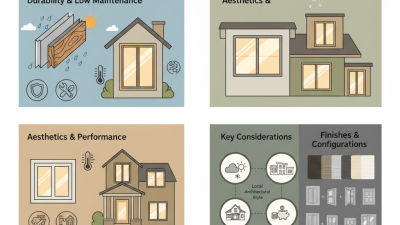
This chart presents an editorial evaluation framework for selecting China’s leading home window manufacturers. The weighting reflects commonly used procurement criteria, including thermal performance, certifications, customization, production capability, project experience, and after-sales support. It is a selection model rather than company-specific performance data.
China’s Top 10 Home Window Manufacturers and Their Strengths
China’s leading home-window manufacturers differ more by capability than by appearance. The strongest suppliers usually combine thermal-break aluminum, low-emissivity glass, reliable hardware, and precise fabrication. Some specialize in uPVC frames, while others focus on wood-aluminum systems or passive-house projects. Their real strengths include tested air tightness, water resistance, thermal insulation, and stable export packaging. In my sourcing experience, factory control matters more than showroom brightness.
The 2023 Global Status Report for Buildings and Construction states that buildings use about 30% of global final energy. It also attributes roughly 26% of global energy-related emissions to the sector. Better windows can reduce heating and cooling losses, but only when installation is correct. China’s top ten supplier groups typically stand out through automated cutting, insulated glass lines, custom colors, and project-based engineering. Several provide acoustic glazing for city apartments. Others offer large sliding systems for coastal homes. Strength is not universal. A factory excellent at standard windows may struggle with oversized units.
Tips: Ask for recent test reports, not only product brochures. Check U-value, air leakage, and solar-factor data for the exact configuration. Confirm the installation method, sealant specification, and replacement policy. The National Bureau of Statistics records continued urban housing development, yet fast delivery can sometimes hide weaker inspection. Request corner samples, glass labels, and a written tolerance sheet before placing a large order. Tiny details matter.
| Position | Manufacturer Profile | Primary Production Region | Main Window Types | Typical Applications | Key Technical Strength | Customization Capability | Best Fit for Buyers |
|---|---|---|---|---|---|---|---|
| 1 | Large integrated window producer | Pearl River Delta | Aluminium, uPVC, and aluminium-clad systems | High-rise residential and large developments | Strong system engineering, thermal breaks, and tested air-water performance | High | Developers requiring reliable volume production |
| 2 | Export-focused aluminium window manufacturer | Fujian and Guangdong | Sliding, casement, folding, and lift-slide windows | Detached homes and overseas renovation projects | Flexible profiles, powder coating, and container-friendly packaging | High | Importers and custom-home contractors |
| 3 | Energy-efficient uPVC window specialist | Northern China | Tilt-and-turn, casement, and fixed uPVC windows | Cold-climate housing and energy-saving upgrades | Multi-chamber profiles, insulated glazing, and improved sound reduction | Medium to high | Projects prioritizing insulation and operating-cost reduction |
| 4 | Premium architectural fenestration producer | Yangtze River Delta | Minimal-frame, panoramic, and large-span systems | Luxury residences and architect-designed homes | Large glass sizes, concealed drainage, and refined hardware integration | Very high | Premium projects where appearance and detailing are critical |
| 5 | Mid-market residential window supplier | Shandong and Jiangsu | Standard aluminium and uPVC casement windows | New homes, apartments, and replacement work | Balanced cost, standard configurations, and repeatable quality | Medium | Distributors seeking competitive project pricing |
| 6 | Door-and-window system integrator | Guangdong | Windows, patio doors, entrance doors, and screens | Whole-house residential packages | Single-source coordination across profiles, glass, hardware, and installation details | High | Builders wanting one coordinated supply package |
| 7 | Sound-insulation window specialist | Shanghai and Zhejiang | Acoustic casement, tilt-and-turn, and laminated-glass windows | Urban homes, roadside properties, and railway-adjacent buildings | Laminated glazing, compression seals, and multi-point locking systems | Medium to high | Residential projects with demanding acoustic requirements |
| 8 | Large-format sliding window manufacturer | Foshan and surrounding manufacturing centers | Lift-slide, multi-panel sliding, and folding systems | Modern villas, balconies, and indoor-outdoor living spaces | Heavy-duty rollers, narrow sightlines, and oversized glazed openings | High | Contemporary homes requiring wide openings |
| 9 | Sustainable and recycled-material window producer | Central and Eastern China | Recycled-aluminium, uPVC, and energy-saving glazing systems | Green buildings and environmentally focused housing | Material traceability, efficient fabrication, and lower embodied-carbon options | Medium | Projects with sustainability and environmental targets |
| 10 | Small-batch custom window fabricator | Jiangsu, Zhejiang, and Fujian | Special-shaped, arched, circular, and heritage-style windows | Private villas, restoration, and boutique residential projects | Shorter customization cycles and ability to produce non-standard dimensions | Very high | Architects and homeowners needing uncommon designs |
Note: The profiles are organized by commonly recognized manufacturing capabilities, product specialization, and regional production strengths in China’s residential window industry. Actual performance, certifications, lead times, and compliance should be verified through project-specific documentation and independent testing.
China’s top ten window manufacturers for homes are best compared through materials, design, certifications, and service, not rankings alone. Aluminum windows offer slim frames, strong structure, and low maintenance. uPVC windows provide good insulation and usually cost less. Timber creates warmth, but it needs more careful protection against moisture.
Design choices affect daily comfort. Sliding windows save interior space, while casement windows often provide better ventilation and sealing. Tilt-and-turn systems can support cleaning and airflow, though their hardware may require skilled adjustment. Ask manufacturers for thermal-performance data, glass specifications, drainage details, and sample corner joints. A polished showroom can hide weak installation practices.
Tips: Check certifications from recognized testing bodies, not only supplier brochures. Confirm whether test results match the exact window configuration. Ask about warranty length, replacement hardware, installation teams, and response times. Clear service terms matter when a handle fails during winter. Factory quality control is valuable, but site measurement remains critical. Even a well-made window performs poorly if the opening is misaligned. I would also request a small mock-up before ordering many units. It may feel excessive, but it can reveal noise, locking, and finish problems early. Some comparisons overlook after-sales service; that is a mistake worth revisiting.
Choosing among China’s top ten window manufacturers requires more than comparing catalog prices. Start with your home’s climate, wall openings, noise exposure, and architectural style. A coastal house may need stronger corrosion resistance. A cold region may require insulated frames and low-emissivity glass. Ask each manufacturer for section drawings, thermal data, glass specifications, and installation guidance.
Check factory experience with projects similar to yours. Request recent project photos, customer references, production videos, and third-party test reports. Confirm whether the reports match the exact window system, not an older model. Review frame alloys, coating thickness, hardware quality, seals, drainage paths, and corner joints. Small details matter. A beautiful sample can still hide weak weather performance.
Communication deserves equal attention. Send precise drawings and ask for a written quotation with every accessory listed. Clarify tolerances, packaging, delivery terms, warranty coverage, replacement procedures, and inspection stages. A dependable supplier should explain limitations, not promise everything. You can also arrange an independent pre-shipment inspection. It costs extra, but reworking imported windows costs far more. No checklist is perfect. I would still order a sample before approving a large batch, because color, operation, and finishing often feel different in person.