
Leave Your Message

10 Best Window and Door Manufacturers Worldwide

Choosing a window or door maker is not just a logo decision. It shapes comfort, daylight, security, maintenance, and energy use. A product that performs well in a mild coastal home may struggle in a cold, windy region. Frame material, glazing, hardware, installation support, and local service all matter. Small details matter. Think of a sash that sticks after rain, or a patio door that lets warm air escape around its edge. Those everyday problems can outweigh a polished brochure. Building scientist Joe Lstiburek has said, “Windows are for looking through, not for looking at.” It is a useful reminder, though not the whole story. Performance deserves equal attention.

This guide to 10 best window and door manufacturers worldwide offers a practical starting point for comparing established brands across the Windows Doors industry. The selection considers product range, material options, documented performance information, customization, warranty terms, and service availability. It is not a universal ranking: product lines and support vary by country, and even a well-made unit can disappoint when poorly specified or installed. Look beyond attractive showroom displays. Compare published thermal and weather-performance ratings, check what replacement parts are available, and ask who handles installation and warranty claims in your area. A few details may remain hard to compare across markets. That uncertainty is worth acknowledging, not hiding. Use the list to narrow your choices, then confirm specifications for your climate, building, and budget.
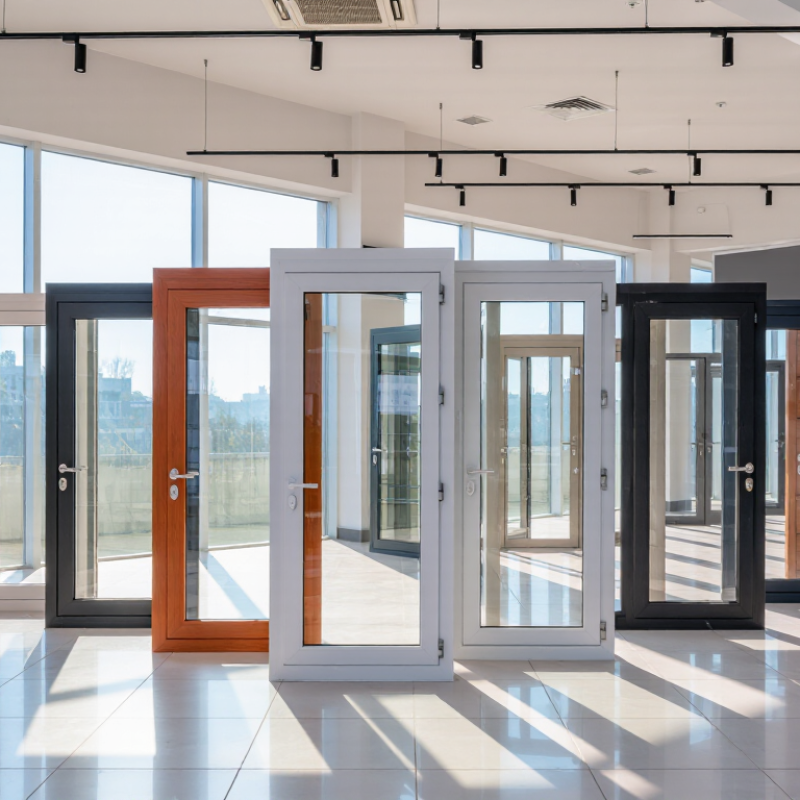
10 Best Window and Door Manufacturers Worldwide

Defining the Global Window and Door Manufacturing Industry

The global window and door manufacturing industry turns building requirements into products that must fit, seal, move, and last. Manufacturers work with materials such as aluminum, timber, steel, and uPVC, choosing profiles and hardware for different climates and building types. A coastal apartment may need corrosion-resistant fittings, while a cold-climate home depends on insulated frames and carefully sealed glazing. Small details matter.

Production combines design, material processing, assembly, and quality checks. Computer-controlled cutting can improve consistency, but it does not solve every problem. Poor installation, uneven openings, or weak seals can undermine a well-made unit. That gap between factory performance and real-world results deserves more attention.

The industry also responds to changing expectations around energy use, noise control, security, and recycled materials. Buyers may compare thermal ratings, air leakage, water resistance, durability, and maintenance needs. Yet specifications can be difficult to compare across markets, and a high rating alone does not guarantee a suitable product. Context matters. Skilled manufacturers document testing methods and explain limitations clearly, helping architects, builders, and homeowners make informed choices. The best decisions account for the building, local weather, budget, and the people who will use the doors and windows every day.

Criteria for Selecting the World's Leading Manufacturers

Selecting the world’s leading window and door manufacturers requires more than comparing catalogues. Buyers should examine verified performance data, production controls, and support after installation. Look for test reports covering air leakage, water penetration, wind resistance, and thermal performance. Ask whether results apply to the exact frame, glass, hardware, and size being quoted. Small differences matter.

Evidence should be traceable. A credible manufacturer can explain material sourcing, quality checks, and how defects are recorded and corrected. Request samples of frame corners, seals, and finishes; inspect how tightly the parts meet. Check whether technical documents are current and prepared for the intended climate. A report without clear product details tells you little. Still, paperwork alone cannot reveal every weakness.

Service deserves equal attention. Confirm lead times, replacement-part availability, installation guidance, and the process for handling warranty claims. Speak with project references whose buildings face similar weather and use patterns. A polished showroom may impress, but it is not proof of long-term performance. Independent inspections can help, though they add time and cost. The best choice may vary by project, and even careful scoring leaves some uncertainty.

Profiles of Ten Major Window and Door Manufacturers

A worldwide view of window and door manufacturing reveals different strengths, not one universal standard. A North American producer may specialize in vinyl frames designed for low-maintenance housing. A Canadian manufacturer might combine timber interiors with weather-resistant exterior cladding. A German systems maker often emphasizes engineered aluminum profiles and precise hardware tolerances. An Italian producer may focus on slim frames for contemporary residential projects.

A Scandinavian manufacturer commonly works with timber suited to cold climates and seasonal changes. A Swiss producer may be known for carefully tested insulation and airtightness. A Japanese manufacturer can bring tight production tolerances to compact, precision-built systems. A South Korean supplier may develop large glazed units for high-rise construction. Details matter. Ask how products are tested, installed, and serviced locally.

A Turkish manufacturer may serve export markets with varied frame materials and flexible production volumes. An Australian producer often designs for strong sun, heat, and sudden weather shifts. These are broad profiles, not a fixed ranking; capabilities vary between product lines and factories. Even polished specifications can leave gaps. Check independent test reports, warranty terms, replacement-part access, and installer training before comparing offers. A showroom sample may feel solid, yet reveal little about long-term performance in a real building.

Population Scale Across Major Global Regions

Population provides context for the potential scale of regional markets for window and door manufacturers. Figures are approximate 2024 estimates, in billions of people.

Source: United Nations, World Population Prospects 2024. Regional figures are rounded.

Comparing Products, Materials, and Global Market Reach

Comparing global window and door manufacturers means looking beyond catalog photos. Glass area, frame depth, seals, hardware, and tested air and water performance shape everyday use. Material trade-offs are tangible: vinyl can lower upfront cost and maintenance; aluminum supports slim frames but conducts heat unless thermally broken; timber insulates well, yet needs regular care. Fiberglass offers dimensional stability, though repair options may be limited in some regions. Fit matters, too.

Global reach means more than export maps. It includes regional production, installer training, replacement-part access, and support for different climates. Grand View Research valued the worldwide windows and doors market at USD 208.5 billion in 2023, projecting 4.9% annual growth through 2030. This is a market estimate, not evidence of product quality; report definitions can also vary. The International Energy Agency says buildings account for about 30% of global final energy consumption. Efficient glazing and airtight installation can help reduce energy use, but results depend on climate and workmanship. Compare verified whole-window ratings, warranty support, service coverage, and price. One awkward truth: even a premium frame can perform poorly when fitted badly. Not always.

Key Innovations and Sustainability Trends in the Industry

Across the global window and door industry, innovation is increasingly judged by what a product saves, not only how it looks. Triple glazing, low-emissivity coatings, and insulated frames can reduce heat transfer when matched to local climate conditions. Thermal breaks help limit cold spots around metal frames. Details matter. A poorly sealed corner can undermine an otherwise efficient unit, so careful installation and air-leakage testing remain essential.

Sustainability work now reaches beyond energy performance. Some manufacturers incorporate recycled aluminum, certified timber, or lower-impact polymers, while design teams consider whether parts can be repaired or separated for recycling. Recycled materials are not automatically the better choice; sourcing, durability, and transport all affect their footprint. Smart sensors can flag open windows or rising humidity, but electronics add components that may be difficult to replace. The picture is not perfectly tidy. Product labels and lifecycle data also vary, making comparisons hard for buyers. Clearer reporting, durable hardware, and practical repair instructions would make environmental claims easier to evaluate.

10 Best Window and Door Manufacturers Worldwide - Key Innovations and Sustainability Trends in the Industry Global industry capability overview — technology areas are presented without company names and are not a ranked manufacturer list.
No. Manufacturer Capability Key Innovation or Practice Sustainability Benefit Useful Performance Evidence Reference
1 Low-emissivity glazing Low-E coatings manage the transfer of radiant heat through window glass. Depending on coating and glazing configuration, they can be selected to limit heat loss, solar heat gain, or both. Can reduce heating and cooling demand when specified for the building’s climate and orientation. Compare whole-window U-factor and solar heat gain coefficient (SHGC); results depend on the complete window assembly. U.S. Department of Energy: Windows
2 Triple-glazed insulated units Three panes create two insulating cavities. Gas fills and low-E coatings may be used within the insulated glass unit. Can improve thermal performance in climates where reduced heat transfer is beneficial; added glass also increases material use and weight. Assess whole-window U-factor, visible transmittance, SHGC, and the product’s tested configuration. U.S. Department of Energy: Window selection
3 Thermally broken metal frames An insulating barrier separates the interior and exterior sections of a conductive metal frame, reducing heat flow through the frame. Improved frame insulation can support lower whole-window energy loss and help reduce interior condensation risk. Review frame and whole-product thermal transmittance values, such as Uf and Uw, where reported. U.S. Department of Energy: Window components
4 Multi-chamber and insulated frames Frame designs may use internal chambers, insulating inserts, or low-conductivity materials to limit heat transfer. Better-insulated frames can complement high-performance glazing and reduce operational energy needs. Compare whole-window U-factor rather than relying on frame material alone; ratings vary by size and configuration. National Fenestration Rating Council
5 Warm-edge spacers and insulated glass assembly Spacer systems separate panes around the glass perimeter. Warm-edge designs use less conductive materials than conventional metal spacers. Can reduce heat transfer at the glass edge and help limit condensation under suitable indoor and outdoor conditions. Check the certified whole-window rating and the insulated-glass unit’s durability and condensation information. U.S. Department of Energy: Window components
6 Recycled aluminum content Aluminum window and door systems can incorporate recycled aluminum, subject to product design and material availability. Recycling aluminum requires substantially less energy than producing primary aluminum. The U.S. Department of Energy reports savings of about 95% for recycled aluminum production. Request recycled-content documentation and clarify whether the figure is pre-consumer, post-consumer, or combined. U.S. Department of Energy: Aluminum
7 Responsibly sourced wood Wood components can be sourced through certified forestry and chain-of-custody systems. Traceability helps buyers verify that specified wood products come from responsibly managed sources. Check the certificate scope, product documentation, and chain-of-custody claim for the supplied item. Forest Stewardship Council: Chain of custody
8 Environmental product declarations An Environmental Product Declaration (EPD) reports environmental-impact information for a defined product and life-cycle scope. Enables more consistent comparison of embodied impacts when declarations use comparable product category rules and boundaries. Review the declared unit, life-cycle stages, validity period, and applicable product category rules. International EPD System
9 Repairable and replaceable components Replaceable hardware, seals, and glazing units can make maintenance or component replacement possible without replacing the entire frame. Repair and component replacement may extend service life and reduce premature material disposal. Check availability of replacement parts, maintenance instructions, warranties, and glazing-replacement procedures. ISO 14021: Environmental claims
10 Dynamic solar-control glazing Electrochromic glazing changes its tint in response to an electrical signal, allowing solar transmission to be adjusted. When appropriately controlled, it can manage daylight and solar heat gain while reducing reliance on separate shading in some applications. Evaluate switching range, control strategy, daylight needs, energy use, and whole-building performance. U.S. Department of Energy: Smart glass

Performance varies by climate, orientation, product size, installation quality, and test method. Use certified whole-window data and project-specific requirements when comparing products.